
Horse training is 90% mental and 10% physical.
A philosophy of training built on trust, clarity, curiosity and partnership, and an honest account of what it asks from the human.
Kat
Kat is the trainer and owner of Lazy K Horsemanship, based in Columbia Falls and traveling throughout the Flathead Valley. She works with horses and their people on the ground and under saddle: foundation work, colt starting, problem solving, confidence for nervous riders, tack checks, and gentle barefoot trims for horses who are difficult about their feet.
Born and raised in Montana, she has been around horses since she was small. Before Lazy K she spent nearly nine years as one of the founders, and the executive director, of Two Bear Therapeutic Riding Center, the nonprofit on 600 acres between Whitefish and Kalispell that provides adaptive horsemanship, equine assisted psychotherapy and pediatric physical therapy. She helped build it from an idea into a PATH International member center serving families across the valley, and was named to the Flathead Beacon’s 20 Under 40 class of 2024 for that work.
Nine years of putting riders with disabilities on horses teaches you something specific. A horse that is merely obedient is not the same as a horse that is genuinely settled, and the difference matters most when the person in the saddle cannot correct a mistake. A great deal of the Lazy K standard comes from that.
She is also a recipient of the A Legacy of Legends horsemanship scholarship. That is worth explaining, because it is the part of her background that most directly explains how she trains. A Legacy of Legends was founded by Carolyn Hunt, Ray Hunt’s widow, together with Buck Brannaman, after Ray died in 2009, for the express purpose of keeping the teaching alive. Its scholarships exist so that people who never had the chance to work with Tom Dorrance or Ray Hunt can still be taught by those who did.
So when this site says the horsemanship is rooted in the vaquero tradition of the Dorrance brothers, Ray Hunt and Buck Brannaman, that is not a description of an influence picked up from books and video. It is a line she was formally handed, by the organization that exists to hand it on. That tradition is paired here with a working understanding of the horse’s nervous system, drawn from Warwick Schiller, Tristan Tucker and the equine neuroscience of Dr. Steve Peters.
What she actually sells is not a program. It is a way of asking questions that a horse can answer.
Where it starts
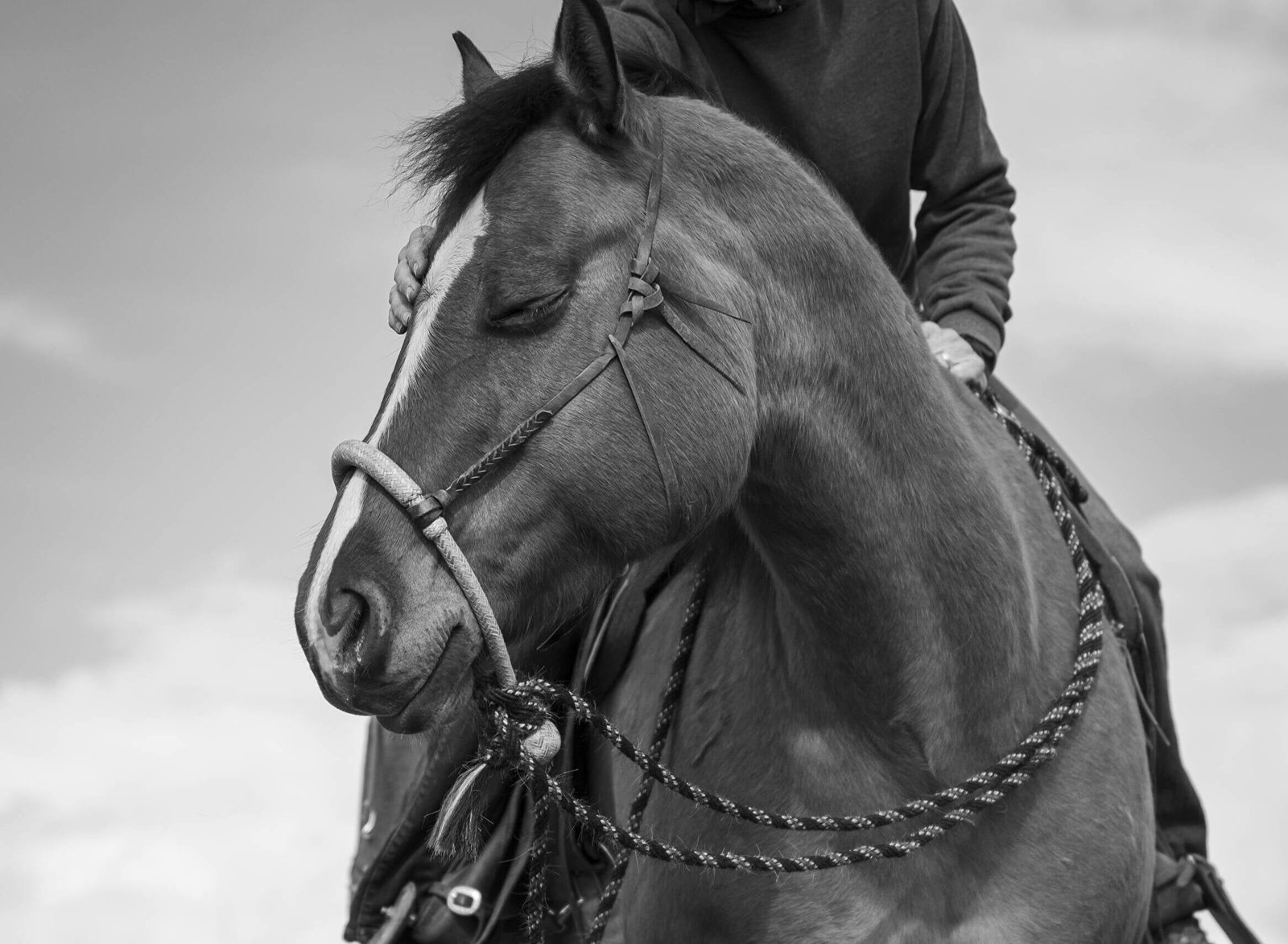
“Horse training starts with the horse’s wellbeing in mind first, and progression in technique and skill second. In order to actually train a horse, you first need to gain that animal’s trust through consistent, methodical and routine interactions.”
“No living creature, horse, human or other, can learn while scared. It is easy to fake a move, skip steps and force collection, hold a horse in a position to mimic what looks cool in the show ring, and use gimmicks, bigger bits, tie downs and spurs to constrict, control and manipulate a horse into doing a maneuver out of fear. But when it comes down to it, this approach causes physical and emotional damage to the animal.”
“Horses are born pure, with no braces, anxiety, fear, or reason to fight. They are born curious. I believe it is our responsibility to keep the purity, the curiosity and the softness horses are innately born with, and the only way to do that is to methodically build a mutually trusting and respectful relationship from the get go.”
“It is like whipping a dancer to dance.”
That is what she means by breaking a horse. “You break their spirit, you teach them to endure, shut down, and take it. They become robots with no connection or trust. They just operate on the training of if I don’t do the thing I will get punished. Those horses are hard to catch. There is no beauty in this approach.”
What the whole thing comes down to
Clarity
Make the question understandable. A horse can’t answer something it can’t read.
Consistency
Predictable rules, predictable responses. The same ask, the same way, every time.
Curiosity
Let the horse think, investigate, and search for the answer instead of bracing for a correction.
Accountability
Look at the human before blaming the horse. Almost always, that’s where the answer is.
Partnership
A horse that participates because it understands, not because it’s afraid of what happens if it doesn’t.
And one rule
Nothing is personal. A horse isn’t giving you a hard time. A horse is having a hard time.
How that plays out in a session
Horse first, technique second
The horse’s physical and emotional wellbeing comes before the maneuver, the lesson, the competition or the timeline. A horse can be made to look collected, soft or responsive with enough equipment and restriction. Appearance isn’t understanding.
The question isn’t “can I make the horse do it?” It’s “does the horse understand it, and can they do it willingly?”
Trust is the foundation
Trust isn’t created by treats, petting, or simply spending time together. It is built through thousands of predictable interactions in which the horse learns: my person means what they say, the rules don’t randomly change, pressure has a purpose, when I try I will be heard, and I won’t be punished for being confused.
Consistency creates predictability. Predictability creates confidence. Confidence creates curiosity. And curiosity creates a horse that is willing to learn.
Nothing is personal
“Horses don’t have the ability to hold a grudge, do something out of spite, or intentionally ruin a ride. They operate on instinct and survival.” When a horse bites, kicks, bucks, braces, freezes or bolts, the job isn’t to be offended. It’s to ask why that behavior made sense to the horse.
That doesn’t mean dangerous behavior gets ignored. It means a boundary can be firm without becoming emotional. Fair doesn’t mean permissive.
Pressure and release is a language
Pressure isn’t bad. Unclear pressure is. “We are teaching our horses how to have a conversation through physical movement. We can’t expect our horses to automatically know what a leg cue for a flying lead change is.”
It starts with energy and movement, then individual feet and muscles, then increasingly specific cues, until what began as physical pressure has become a conversation, and the cue gets lighter because the understanding got bigger.
Reward the try
Not the finished answer. The smallest correct response. A shift of weight. A softening. A thought. An ear. “Allowing them the dignity to search for the right answer, and giving them releases for each little try they offer us.”
That is what builds a horse that searches for the answer instead of waiting to be forced into it.
Teach the horse to think, not react
Horses are prey animals; under threat, the survival system takes over and you get flight, fight or freeze. A reactive horse usually isn’t stubborn. It just doesn’t know how to process what it’s experiencing.
“If we can teach and reinforce a horse how to think and not react, we build a horse that can emotionally handle any situation, because they are able to think about the situation, separate intention, and search for answers instead of fleeing or mentally shutting down.”
The spook usually isn’t the object
This is the piece most owners have never been told. A horse in discomfort will dissociate from the part of its body that hurts and compensate with the rest, and then project that feeling outward.
“Horses that are in discomfort dissociate from their bodies, and learn to project that feeling into their environment, which comes out as them spooking at butterflies or that scary door they’ve walked by 1,000,000 times. It’s not actually the environment, it’s that they don’t know how to feel safe in their own bodies.”
The human is part of the training
“If I am feeling emotional, I cannot expect my horse to not be emotional. If I am angry, I cannot expect my horse to behave around me.”
“There is no room for emotions during horse training.” Before correcting the horse: was the cue clear, was the timing right, did the horse get enough time, was I consistent, did I create the confusion, and was I asking for something this horse was ready to do?
You get out what you put in
The training doesn’t start when the saddle goes on. It starts when you walk into the pasture. “If we are barbarians with our hands and body when we get our horses from the pasture, then expect them to be light and responsive when we go to ride, and get insulted when they are heavy, bracing against us, and distracted, the human needs to take a step back and realize that we have caused that.”
Every horse is an individual
One horse needs more time, another needs more movement; one needs a simpler question, another needs more responsibility. “It’s our job as the human to decide and provide the best possible scenario for the horse to be successful.”
The horse doesn’t have to fit the program. The program meets the horse where it is.
Pivot without losing the standard
Being consistent doesn’t mean stubbornly finishing a plan. Maybe the horse is sore, tired, or was asked too much. The goal stays the same; the path can change.
“There are times when walking away and trying again tomorrow is the kindest thing you can do for both you and your horse.”
Train for the horse’s whole life
Not a horse that performs beautifully for one experienced rider and falls apart when anything changes. A horse that can think through unfamiliar situations, recover from mistakes, regulate itself, communicate discomfort, and fill in for a less experienced rider.
That is what makes a truly broke horse. Not obedience. Understanding.
What this buys you
For your horse
- A life where people are kind to it. Teaching a horse boundaries and how to be light on the end of a lead line is the kindest thing you can do for it. It means every farrier, vet, hauler and future owner has a good experience.
- Fewer holes to fall into. A horse that understands pressure doesn’t need bigger equipment later.
- Room to be wrong. A horse that isn’t punished for guessing keeps offering ideas, which is what makes it trainable at all.
- Comfort taken seriously. Sore backs, bad saddle fit and sore feet get looked at before they get labeled as attitude.
For you
- You learn to read your own horse. The point isn’t to hand the horse back fixed. It’s that you can see what it’s telling you.
- Fewer scary moments. A horse that thinks instead of reacting is a safer horse for a nervous rider, on a trail, in a trailer, at a new place.
- An honest answer about timelines. Nobody is going to sell you a package that promises a finished horse in six weeks.
- Permission to stop. Some days the right training decision is to put the horse away and try again tomorrow. That is a skill, and it gets taught here.
What Lazy K is not
It isn’t about making horses robotic. It isn’t about dominating the horse. It isn’t about the biggest bit, the strongest equipment, or the fastest way to make a maneuver happen. And it isn’t about letting a horse do whatever it wants in the name of gentleness.
The goal is neither dominance nor permissiveness. The goal is clear communication. A horse can have boundaries, expectations, and corrections, and all of it can happen without fear, anger, or loss of trust.
One thing worth saying out loud
“Horses do not find comfort in cuddling, sweet words or pet names. They can’t be bought with treats, and just hanging with them in the pasture asking nothing of them doesn’t build relationship. Learning how to be a leader, how to ask the right questions that will lead your horse to success, that is true relationship and true horsemanship.”
Leader in the sense of the person who is clear and consistent and asks answerable questions, not rank, not dominance, not being the boss of the herd.
If that lands wrong, this probably isn’t the right barn for you, and that’s a fair thing to find out on a website rather than three lessons in.
What it looks like from the outside
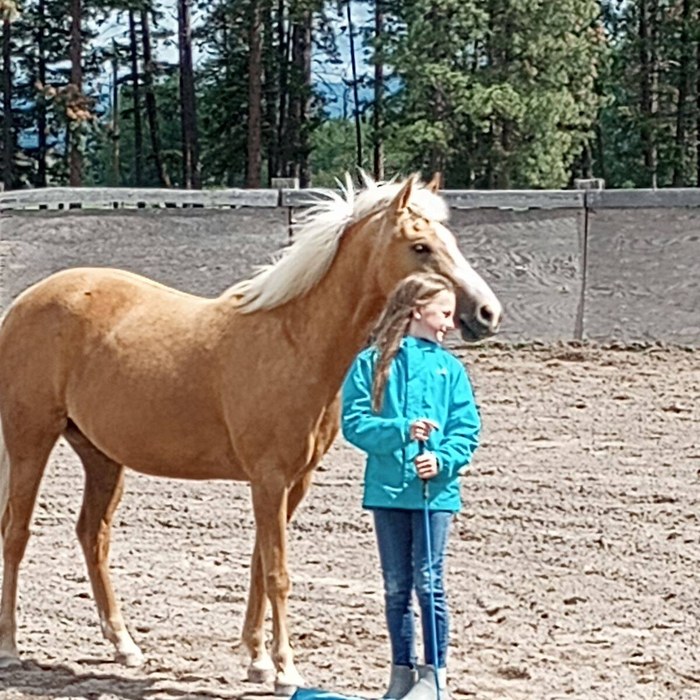
“Kat embodies the essence of relational horsemanship: she meets each moment with presence, clarity, and compassion. She is gentle yet firm, enthusiastic yet steady, always leading with intention while allowing space for true connection. She arrives with a thoughtful plan, yet adapts seamlessly to what the horse, or the human, most needs in that moment.”
 Erica, Todd & Mia Lengacher
“Her work has touched every area we needed: groundwork, riding, building confidence for both horse and rider, overcoming past trauma, and even tack checks, hoof care, and farrier work. She listens carefully to concerns, never pushes beyond comfort, and always finds a way to move forward that feels safe and effective.”Mandy Mohler
Start where the horse is
A lesson, a training block, or a three hour consultation if you’re new to all of this.