
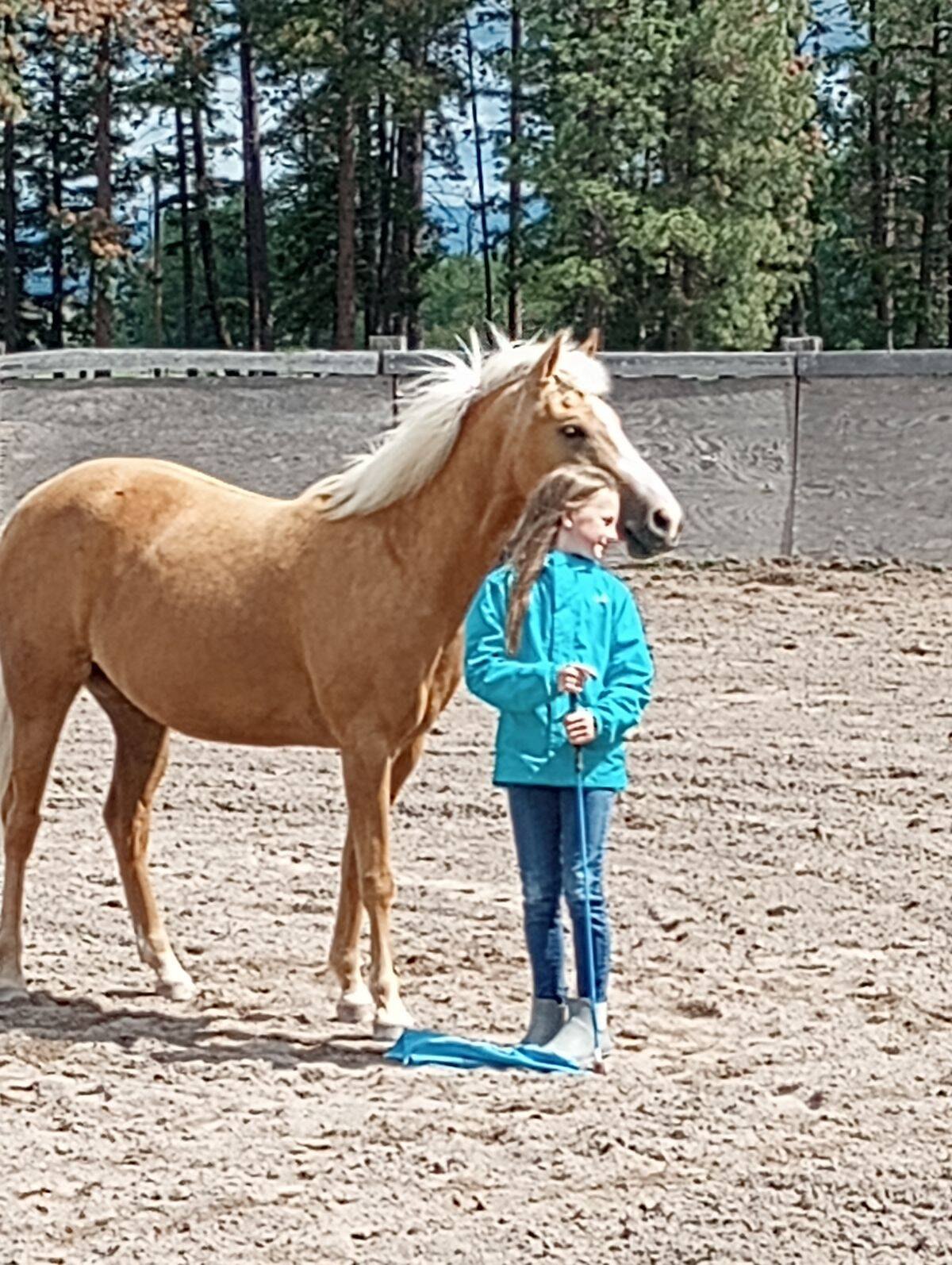
Horsemanship lessons between owners and their equine.
Summer: Kat travels to your barn, boarding facility or private property throughout the Flathead Valley. Winter: services are based at Dauntless Equine in Kalispell.
Scheduling happens by conversation, not by calendar. See how that works.
Individual Lessons
With owners and their horses
- One on one riding or groundwork instruction
- At your boarding facility or private barn
- Focused on communication, safety and handling
- You and the horse both get taught
Horse Training
30, 60 or 90 day program
- A tune up at the start of the riding season
- First rides put on a young horse
- Foundational work for a horse needing more education
- Begins with a pre training evaluation
- Includes a weekly lesson with you and your horse
Equine Training
Without owner present
- Weekly training for foundational work
- Problem solving and ongoing development
- You provide the boarding location
- Progress reported back to you each session
New Owner Consultation
Before and around buying a horse
- Property layout and design for a safe setup
- Defining realistic horsemanship goals
- Choosing a horse that matches your experience
- Pre purchase support, including traveling with you to see the horse
Farrier Service
Gentle barefoot trims
- Gentle, patient barefoot trims
- Specializing in difficult to handle feet
- The goal is a calm trim, not a fast one
- Handling taught, not forced
Prices current as of August 2026, shown in USD, and quoted per session. Summer travel within the Flathead Valley is included; call about anything further out. Winter sessions take place at Dauntless Equine in Kalispell. Card, Apple Pay, Google Pay and Cash App accepted.
30, 60 or 90 days, built around the individual horse
$1,500 per month. This is the option for a horse that needs a real block of consistent work rather than an hour here and there.
It suits three situations in particular: a tune up at the beginning of the riding season, first rides put on a young horse, or foundational work for a horse that needs more education than it has been given so far.
Every program begins with a pre training evaluation. Kat assesses where the horse actually is right now, identifies the goals, and sets realistic expectations for what can honestly be accomplished in the time booked. Nobody gets sold ninety days of work a horse doesn’t need, and nobody gets promised a finished horse in thirty.
The weekly lesson is not optional
Every training program includes a mandatory weekly lesson with the owner and the horse, and that is the part that makes the rest of it worth paying for.
A horse can be started beautifully and then go home to the same handling that created the problem. The weekly lesson is how the progress made in training carries over into the partnership at home, which is the whole point.
You get out what you put in. That applies to the owner as much as the horse.
Ask about a training blockYou talk to Kat first. Then she schedules.
There is no self serve booking calendar on this site, and that is deliberate. Horses arrive with histories, and the right first session for a green colt is not the right first session for a frightened rider or a horse that won’t stand for the farrier. A five minute conversation sorts that out before anyone’s time gets spent.
Call, text or email
Whichever you prefer. Tell her about the horse, what’s happening, and what you’re hoping for.
You talk it through
What the horse needs, what you need, and which service actually fits, which is sometimes not the one you expected.
Kat schedules it
She books the time directly with you and confirms the seasonal location: your barn in summer or Dauntless Equine in winter.
Have the horse ready
Caught or catchable, in a place you can both work safely. Checklist below.
What to have ready
- A safe, enclosed place to work. A round pen or arena is ideal; a well fenced paddock works. Flat, no gopher holes, no loose wire.
- Your horse’s actual tack. Bring what you normally ride in, not the nice set. Fit problems only show up in the gear you really use.
- A rope halter and a 12 to 14 foot lead if you have one. If you don’t, ask. It’s worth owning before it’s worth buying anything else.
- An honest history. Past injuries, past trainers, what scares him, what has gone wrong. Nothing here gets judged; it just saves a session.
- Recent hoof and dental dates, and whether the vet has seen him lately.
- Your own questions, written down. They evaporate the moment the horse does something interesting.
Straight answers
How long will this take?
Longer than you want, and the honest answer depends on the horse, the hole, and how much you practice between sessions. What can be promised is an order of operations and a visible change in the first session, usually in you as much as the horse.
Anyone selling a finished horse on a fixed timeline is selling you a timeline, not a horse.
My horse is dangerous / has a real history. Is that a problem?
No, and it’s worth saying up front so nothing is a surprise. Bring the history. Behavior that looks like malice is almost always self protection, and the work starts by finding out what the horse is protecting.
Safety comes first for both of you. If a session needs to end early, it ends early.
I’m nervous around my own horse. Is that allowed?
It’s common, it’s reasonable, and it’s workable. A lot of this method is about giving the human a plan clear enough that the nerves have something to do. Nothing gets pushed past your comfort on purpose.
Do I have to be there for training sessions?
For Individual Lessons, yes. The lesson is for both of you. For Equine Training, no; that’s weekly work on the horse without the owner present. Most people end up doing some of each, because a horse that goes home to the same old handling goes backwards.
What is the farrier service, exactly?
Gentle, patient barefoot trims, with a specialty in horses who are difficult about having their feet handled. The goal is a calm trim, not a fast one, and the handling that gets you there is training, not restraint.
If your horse needs shoes, corrective work or has a diagnosed hoof pathology, that’s a conversation with your regular farrier and vet.
The hoof care guide covers why the trim cycle matters, what goes wrong when it runs long, and why a horse that fights the farrier ends up with worse feet.
Do I need to sign anything?
Yes. Before the first session you will sign a release covering the risks that come with being around horses. That is standard for anyone doing this work, and Montana law has specific requirements for what such a document has to say.
The honest version of what it means: horses are large, fast, and act on instinct. A horse can spook at nothing, move suddenly, or react to something neither of you noticed, and none of that is anybody's fault. Those are the risks inherent in the activity, and signing acknowledges that you understand them.
What it does not do is excuse careless work. Kat is responsible for the equipment she supplies, for the ground you work on, and for making a reasonable judgment about whether you and a particular horse are a safe match. Those are the questions in the intake conversation, and they are there for a reason.
Do you travel to me?
In summer, yes. Kat travels throughout the Flathead Valley to your barn, boarding facility or private property. If you’re at the edge of the valley or beyond it, call and ask.
In winter, services are based at Dauntless Equine in Kalispell.
Can you help me buy a horse?
That’s exactly what the New Owner Consultation is for: property layout, realistic goals, choosing a horse that matches your experience, and pre purchase support, including traveling with you to see the horse and a list of questions to ask the seller.
Three hours spent here is cheaper than the wrong horse.
Why can’t I just book online?
Because the first thing Kat wants to know is what’s actually going on with your horse, and a calendar can’t ask that. A short conversation means the first session is the right session, and it means she can tell you honestly if what you need is a vet, a farrier or a saddle fitter rather than a trainer.
Call or text 406-270-0087, or send a message. She schedules directly with you from there.
What if the weather is bad?
It’s Montana. Most work happens anyway. If conditions are genuinely unsafe (ice, lightning, deep mud) the session gets moved. You’ll hear from Kat, not from a no show.
Tell her about your horse
Monday through Thursday, 10:30 am to 6:00 pm. Calls and texts both work.