

Buying your first horse: the questions nobody tells you to ask.
The purchase price is the cheapest part of owning a horse, and the wrong horse is the most expensive mistake in this whole sport. Here is how to not make it.
Nobody has ever regretted buying a horse that was too easy.
Almost every horse that ends up needing a trainer was bought by somebody who fell in love with them in a field. That is not a criticism, it is just how it happens. The horse was beautiful, the seller was nice, the day was sunny, and nobody asked the hard questions because asking felt rude.
Ask them anyway. How a seller responds is information, but it is not a test. Plenty of honest private sellers are defensive about a horse they love, and plenty of practised sellers are perfectly relaxed. Weigh what you are told against what you can verify.
What a horse actually costs in a year
Purchase price is a one time number. Everything below repeats every year for twenty to thirty years, because that is how long horses live.
| Cost | Rough annual range | Notes |
|---|---|---|
| Board, if you do not have land | $3,000 to $12,000 | Enormous variation. Pasture board with a shelter sits at the bottom, full care stall board at the top. |
| Hay, if you keep it at home | $600 to $1,600 | Depends on the year, the cutting, and whether you can store a season at once. Buying hay by the bale in February is the expensive way. |
| Farrier | $350 to $1,300 | Barefoot trims on a six week cycle at the low end. Shoes all around, more often, at the high end. |
| Routine vet | $200 to $500 | Vaccinations, dental, fecal egg count. This is the number that does not include anything going wrong. |
| Emergencies | $0 to $5,000+ | Colic surgery alone can run past $10,000. Most years nothing happens. The years something does, it is sudden. |
| Tack, blankets, wormer, supplies | $300 to $1,500 | The first year is the expensive one. |
| Training and lessons | Your call | The one line people cut first, and the one that determines whether the rest of it is fun. |
All in, most people land somewhere between $5,000 and $15,000 a year per horse, and that is before anything goes wrong. Those figures are general ranges, not a quote for the Flathead specifically. Get real numbers by calling two local barns and one local hay supplier before you shop for a horse, not after.
The useful exercise: work out the annual number, then ask whether you would still be comfortable paying it in a year when you are too busy to ride.
What you actually want, versus what you think you want
Buy age and experience
The single best piece of advice in this whole guide: if it is your first horse, buy an older, well broke, been there horse. Something in their teens that has done a job for years and has nothing left to prove.
There is an old line that green plus green equals black and blue, and it is old because it keeps being true. A novice rider and a young horse teach each other the wrong things at exactly the same rate.
A fifteen year old horse can easily give you ten or fifteen good years. You will learn more in your first season on a horse that already knows the answers than in three years on one that doesn't.
Buy the temperament, not the color
Nobody has ever sold a horse because they were the wrong color. People sell them because of what the horse does when they get worried.
Ask what the horse is like on their worst day, not their best. A horse that gets quietly stubborn is a very different animal from one that leaves.
Beauty is genuinely nice to look at and it will not help you one bit at three in the afternoon when you cannot catch them.
Buy for the job you will actually do
Be honest about this. If you are going to walk quiet trails twice a week, you do not need an athlete, and an athlete with nothing to do is a management problem.
A horse that is overqualified for your riding is not a bonus. They will be bored and start looking for opinions.
Take somebody who knows
Bring a trainer, an experienced friend, anybody who has bought horses before and has no stake in this one. You are buying with your heart whether you mean to or not, and a second pair of eyes that is not in love is worth what you pay for it.
This is exactly what the New Owner Consultation is for. Kat will travel with you to look at a horse and give you the list of things to ask.
What to ask the seller
Write these down and take them with you. You will forget every one of them the moment the horse walks out.
- Why are you selling? Listen to the whole answer, and to what is not in it.
- How long have you had him, and who had him before? A horse that has changed hands four times in three years is telling you something.
- What is he like to catch, load, clip, trim and worm? These are the daily realities. A horse that is a joy to ride and impossible to load will run your life.
- Has he ever bucked, reared, bolted or bitten anybody? Ask it plainly, in those words. Vague answers are answers.
- Any vices? Cribbing, weaving, stall walking, pawing. Some are health issues, some are just annoying, all of them are worth knowing before, not after.
- What is his lameness history? Any past injury, any time off, anything managed with medication or injections.
- Can I see vaccination, worming, dental and farrier records? A seller who keeps good records usually keeps a good horse.
- Is he on anything right now? Supplements, medication, anything for pain or behavior. This one matters enormously and is easy to forget to ask.
- Will you allow a pre purchase exam by my vet? Any hesitation here ends the conversation.
- Can I come back and see him a second time, unannounced? Also a very informative question.
What to do when you go see him
The ride is the part everyone focuses on and the least informative part of the day. Everything around it tells you more.
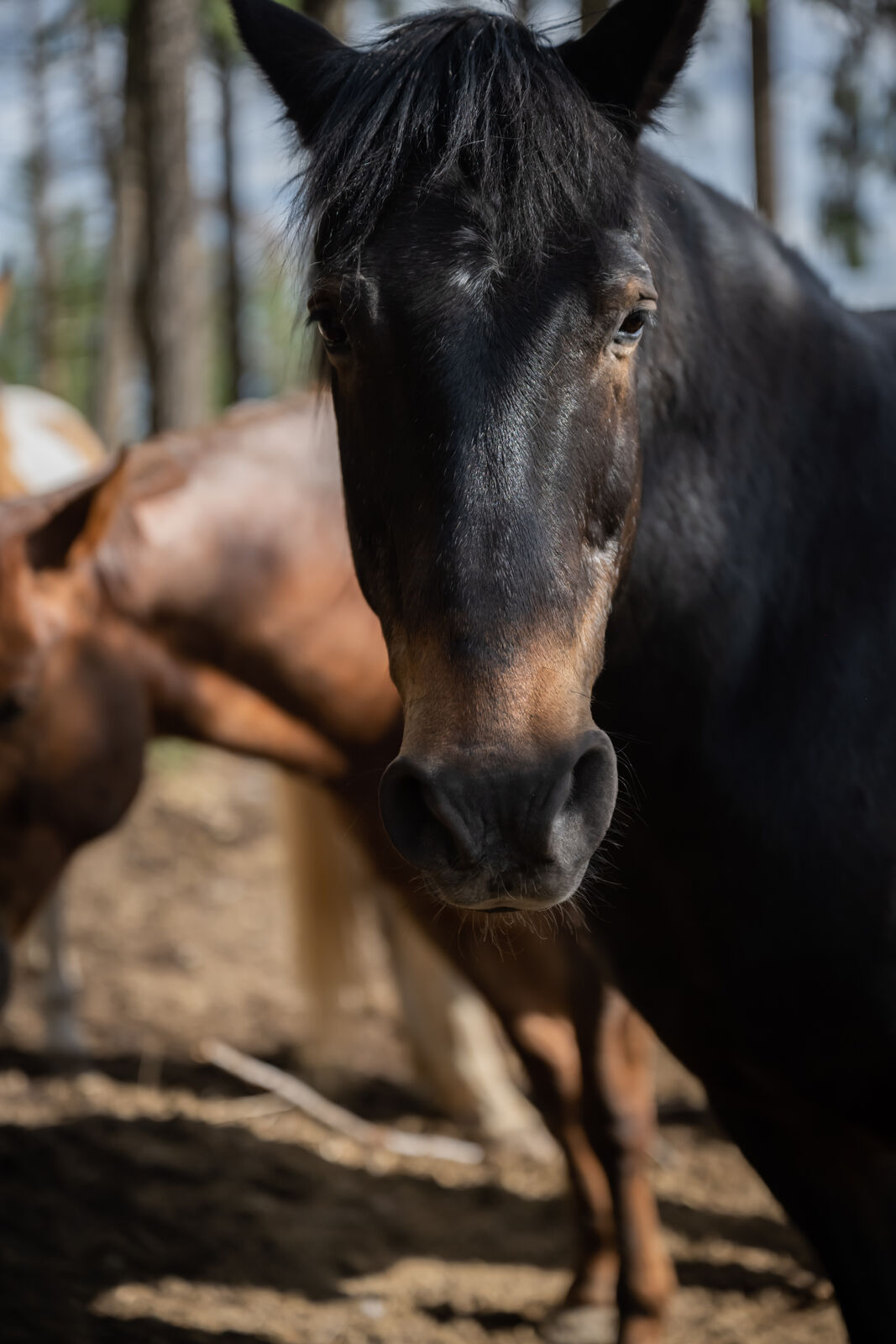
Ask to catch him yourself
Out in the field, with a halter, in front of the seller. How a horse feels about being caught is the most honest review of their life so far.
Do not accept a horse already caught, groomed and tacked when you arrive. Ask politely to start from the pasture. If that is a problem, that is your answer.
Do the boring things
Pick up all four feet. Groom him. Tack him up yourself. Tighten the cinch and watch his face. Put a bridle on. Lead him past something he has to think about.
You are going to do these things every single time you see this horse for the next fifteen years. Find out now what they are like.
Watch the seller ride first
Then ride him yourself, and ride him the way you actually ride, not the way you ride when somebody is watching. Walk. Stop. Turn. Back up. Go somewhere he does not want to go.
Ask to load him
Into a trailer, right there. A horse that will not load is not a minor inconvenience. They cannot go to the vet, cannot evacuate in a fire, and cannot go anywhere fun.
Look at where he lives
Is the water clean? Is the hay good? Are the other horses in decent flesh? A well run place usually produces a well kept horse, and a rough place tells you what he may be recovering from.
Go back a second time
Different day, different weather, and preferably without much warning. Some horses are medicated, lunged flat, or simply have a different personality on a Tuesday.
The pre purchase exam, and what it will not tell you
Get one. Use your own vet, not the seller's. A pre purchase exam is the best protection you have against buying a soundness problem, and the cheapest insurance in the transaction.
What it covers: a full physical, eyes, heart and lungs, a look at the teeth, a flexion and movement evaluation, and a conversation about the horse's history with your intended use in mind. You can add radiographs, bloodwork and a drug screen. There is no standard package. AAEP's guidelines put it plainly: it is “the veterinarian's sole responsibility to determine the extent and depth of each examination”. What gets done depends on the horse, the price, the intended use and what the examining vet judges necessary, so the conversation to have is about your intended use and the scope is theirs to set. For anything you plan to work hard, you probably should.
What it does not cover
A pre purchase exam is not a pass or fail test. AAEP is explicit that the veterinarian “should make no determination and express no opinions as to the suitability of the animal for the purpose intended”, because that “is a business judgment that is solely the responsibility of the buyer”. The vet reports findings; you decide whether this horse suits what you want to do.
It also says almost nothing about temperament, training or manners. It is a snapshot of one horse on one morning. The vet is telling you what they found today and what risks it suggests, not guaranteeing a future.
The behavior half is your job, and it is the half that most first horse purchases actually go wrong on. Very few people sell a sound horse with a lovely mind.
Tell the vet what you want to do with the horse. A finding that ends a barrel racing career may be completely irrelevant for quiet trail riding, and the vet cannot weigh it properly without knowing.
Reasons to say no
- The seller will not allow a pre purchase exam, or wants to use their own vet only.
- The horse is already tacked up and warmed up every time you arrive, and you are discouraged from handling him yourself.
- You are being rushed. "I have three other people coming to see him tomorrow" may even be true. It is still not your problem.
- The story keeps changing, or the age on the paperwork does not match the teeth.
- Nobody will get on him in front of you.
- You feel unsafe and are talking yourself out of it. That feeling is information. Listen to it.
There will be another horse. There is always another horse. The one thing you cannot get back is the two years you spend on the wrong one.
Take somebody with you
The New Owner Consultation covers property setup, realistic goals, choosing a horse that matches your experience, and pre purchase support. Kat will travel with you to see the horse and give you the questions to ask. About three hours, and considerably cheaper than the wrong horse.