

Winter in the Flathead: what actually matters.
Horses handle cold far better than people expect and dehydration far worse. Most of what goes wrong here between November and April traces back to water, footing, or a blanket decision made for the human's comfort rather than the horse's.
Water is the whole game
A horse still needs somewhere around 8 to 15 gallons of water a day in winter. What changes is that a horse eating dry hay instead of grass gets almost no water from their feed, right at the time of year they are least inclined to drink.
Cold water suppresses drinking, and the effect is large. Research at the University of Pennsylvania found that warming water rather than leaving it near freezing increased consumption by roughly 40 percent. Barn observation puts the drop at 30 to 50 percent when water is very cold or access is patchy.
Reduced water intake is considered a primary predisposing factor for impaction colic, which is part of why colic calls cluster in cold snaps. This is not a comfort issue, and it is one of the things most worth managing in winter, alongside forage, salt, shelter, body condition and actually looking at the horse. Winter colic risk is multifactorial, so treating any single item as the whole answer is how the others get dropped.
What to actually do
- Heat the water if you possibly can. A tank heater or heated bucket pays for itself the first winter it prevents one vet call. Aim for water that is not painfully cold rather than warm.
- Break ice more than once a day. A skim of ice at 7am is a solid lid by noon.
- Offer water around feeding. Horses take most of their daily intake within an hour or two of eating, so that window is where the gallons happen.
- Keep salt in front of them. Loose salt encourages drinking, and it is cheap. It is one part of keeping winter water intake up, not a colic preventative on its own. See the supplement guide.
- Watch the manure. Small, hard, dry droppings are an early warning worth acting on before it becomes a phone call at midnight.
Forage is the furnace, not grain
How a horse actually makes heat
All feed produces heat as it is digested. The useful distinction is that fiber fermented in the hindgut generally produces more heat, and produces it over a longer period, than starch digested in the small intestine. That fermentation runs for hours and is what keeps a horse warm from the inside overnight. So the answer to a cold night is more hay rather than more grain, not because grain produces no heat, but because forage produces more of it and for longer.
So the answer to a cold night is more hay, not more grain, and hay late in the evening rather than early. A horse with forage in front of them through the night has a furnace running through the night.
Slow feeders and small hole nets are genuinely useful here. They make a given amount of hay last through the coldest hours instead of being gone by ten.
Shelter beats almost everything
Wind and rain are what actually make a horse cold, far more than temperature. Rain flattens the coat and destroys its insulation. Wind strips the warm air off the skin.
A three sided shed facing away from the prevailing wind, or a good tree line, does more for a horse than most blankets. Give them the option and let them choose. They are better at this than we are.
Dry ground to stand on matters as much as the roof. A horse standing in cold mud is losing heat through their feet and setting up thrush at the same time.
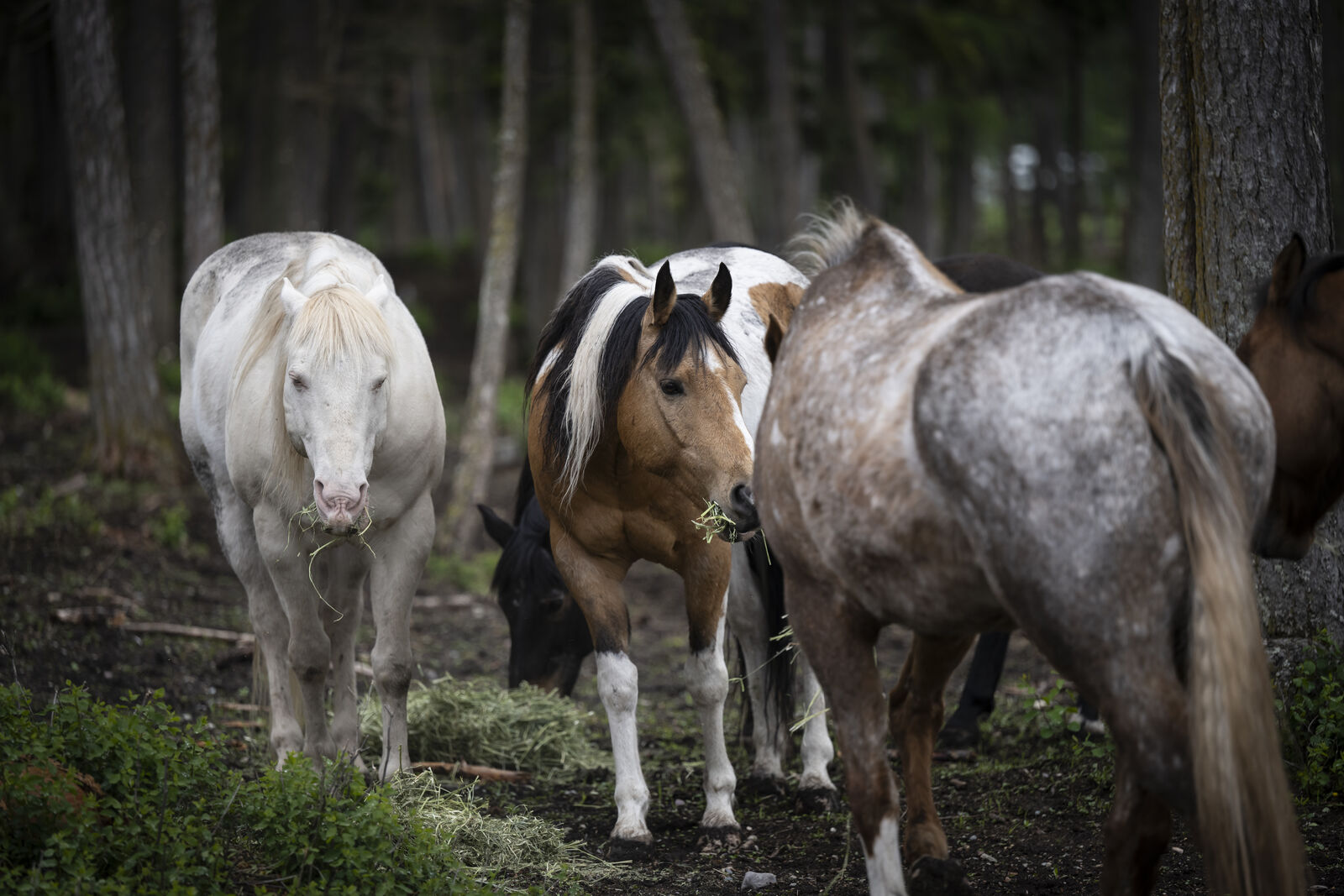
To blanket or not
This one gets heated, and most of the disagreement comes from people applying a rule that fits their horse to somebody else's.
Start with the biology, and with what the biology does not settle. There is no single thermoneutral range that fits every horse. The temperature below which a horse has to spend energy staying warm, their lower critical temperature, moves with coat length and condition, body condition score, whether the horse is acclimatised, wind, wet, age, health, and how much forage they are eating. Published figures for adult horses vary widely for exactly that reason, and quoting one range as “a horse's” invites you to apply it to a horse it does not fit.
The part that holds up: most healthy horses with a winter coat, shelter and plenty of forage are comfortable in weather people find unpleasant, and a great deal of blanketing is done to make the owner feel better. The horse in front of you is the one to read: a clipped, thin or unacclimatised horse is a different animal from a hairy, well-conditioned one in the same field.
A winter coat works by standing the hairs up to trap a layer of warm air. A blanket flattens that coat, so a rug has to replace the insulation it suppresses rather than add to it. A correctly chosen, correctly fitted rug that stays dry generally does that.
The real risks are a wet rug and the wrong weight, not the rug itself. A rug that soaks through, or that lets sweat build up underneath and stay there, is worse than no rug: wet insulation does not insulate. A rug too heavy for the day makes the horse sweat under it and then chill when the weather turns. And a rug on a horse nobody checks hides rubs, weight loss and a coat that is quietly damp. The problem is an unchecked or unsuitable rug, not the act of rugging a horse.
The honest summary: a healthy horse with a full winter coat, shelter, and all the hay they want generally does not need a blanket in this valley. The exceptions below are real exceptions, not excuses.
Horses that genuinely benefit
- Body clipped horses. You removed the insulation, so you owe them the replacement. Rule of thumb: the more hair removed, the more blanket needed.
- Hard keepers and thin horses, who cannot spare the calories to stay warm.
- Seniors, especially with poor teeth, arthritis, or PPID.
- Horses with no shelter at all in wind and freezing rain.
- Horses recently moved from a warm climate who have not grown a coat yet.
- Sick or recovering horses.
If you do blanket: use a waterproof turnout rather than a stable blanket outdoors, take it off and look underneath regularly, and be prepared to adjust as the weather swings. A blanket on a horse in a warm spell is worse than none.
The test that settles it: slide a hand under the coat at the shoulder and along the chest. Warm means fine. Shivering, or a horse standing hunched and tucked with their tail to the wind, means they are spending energy on heat and could use help. Cold ears alone do not mean much.
Two winter problems that cost the most
Ice balls and frozen ruts
Snow packs into the sole and freezes into a ball, so the horse is walking on a lump of ice with no traction. Shod horses get this worst. Snow pads and rim pads help, and so does going barefoot for the winter if the horse can.
Frozen rutted ground is the real hazard. A pasture churned to peaks in November and frozen solid in December is an ankle injury waiting to happen, and horses running on it do real damage to soft tissue.
Drag or roll the gateways and high traffic areas before the freeze. It is cheap and worth doing, and that one afternoon in late autumn saves a lot of grief. It is one useful thing among several, alongside footing, workload, hoof care and turnout, rather than the single most effective lameness prevention available.
The trim cycle does not stop
Feet grow more slowly in cold weather, which is exactly why people quietly let the cycle stretch out over winter, and it is where a lot of horses get behind. Slower growth still means growth, and the mechanics of a long foot do not care what month it is.
Keep picking feet daily. Winter mud and packed manure are perfect thrush conditions, and thrush found in December is a small problem while thrush found in March is not.
Odds and ends that matter
- Turnout and movement. A horse standing in a stall for four months gets stiff, gets bored, and gets a compromised gut. Movement is medicine, and horses handle cold far better outdoors with shelter than shut in.
- Warm up longer and more gradually when you ride. Cold muscles and cold tendons injure more easily. There is no multiplier that fits every horse: how much longer depends on how cold it actually is, on the footing you have, and on the horse: their age, their fitness, whether they have been standing in a stall or moving all day, and any history of a muscle or tendon problem. Build up progressively, and let the horse tell you they are loose before you ask for more. On frozen, rutted or slick footing, the right answer is often to do less rather than to warm up longer. Cool out properly so a wet horse is not standing in the wind.
- Watch weight under the hair. A thick coat hides a great deal. Put your hands on the ribs monthly rather than trusting your eyes, because horses can quietly lose condition all winter and it only becomes visible in spring.
- Vitamin E. A horse on stored hay with no green grass for months is a recognized deficiency risk, and that is most horses here from roughly October to May. See the supplement guide.
- Mud season is its own event. Scratches, thrush, abscesses and lost shoes all spike in the spring thaw. Dry standing areas are the answer, and it is easier to build them in September than in April.
- Check blankets for damage and fit if you use them. A shifted blanket can rub a horse raw at the shoulder in a day.
Winter red flags
Not passing manure, small hard dry droppings, off feed, pawing, looking at the flank, or lying down repeatedly. Impaction colic is the winter emergency, and it is far more treatable early. Call the vet rather than waiting to see if it passes.
Also: shivering that does not stop once the horse is dry and sheltered, a horse that will not get up, or any sudden severe lameness on frozen ground.
Getting set up before the freeze
Property layout, shelter, footing and winter feeding are all part of the New Owner Consultation, and it is worth doing in the fall rather than in February.