

Pasture Stocking and Rotation Planner
Estimate forage demand and sketch a paddock rotation from local production data, while keeping uncertainty visible.
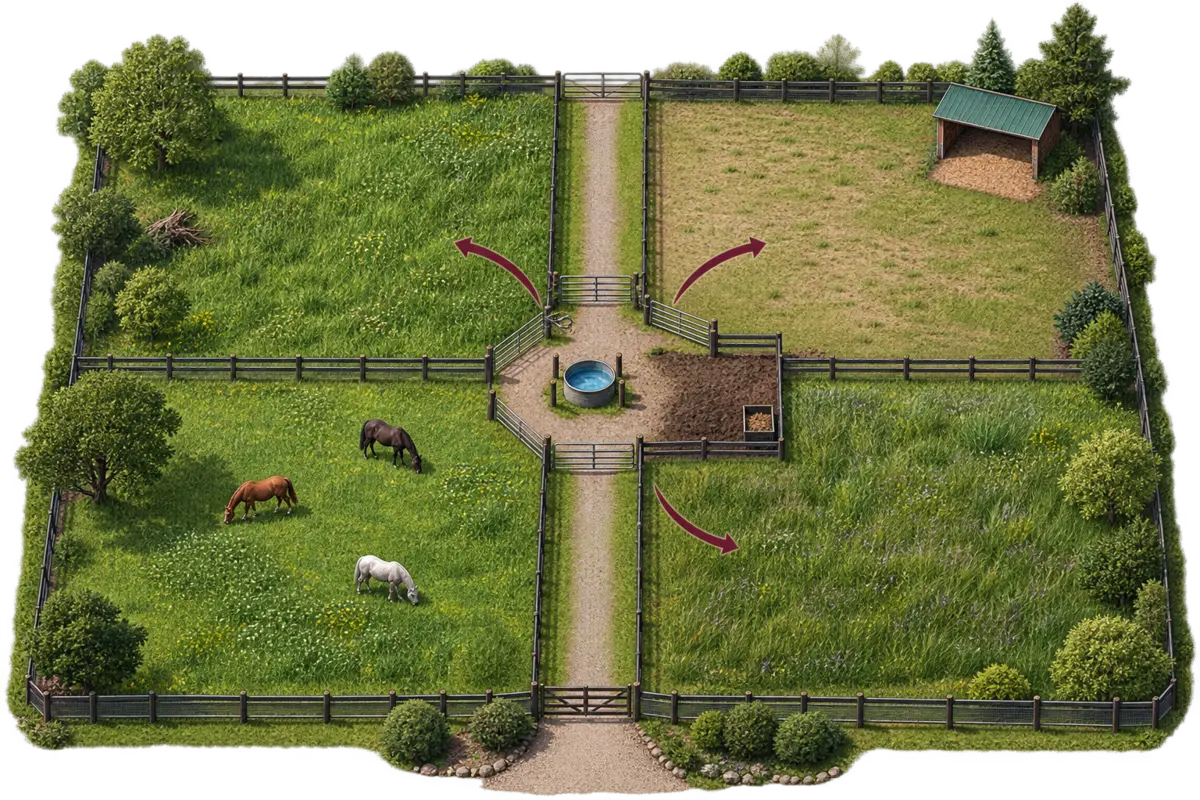
Two acres of productive irrigated pasture and two acres of dry, compacted ground do not provide the same amount of forage.
Forage supply, not acres alone, sets the limit.
This educational estimate uses two percent of bodyweight per day as total dry matter demand, then applies the pasture share you selected and adds other livestock demand. Available forage equals local dry matter production per acre times grazeable acres and your utilization percentage. Rest, regrowth, residual height, drought, irrigation, mud and winter dormancy still require observation.
If you do not know local forage production, contact your county extension or NRCS office. The tool will show demand but will not manufacture a grazing days result.
Sources
- USDA NRCS: Estimating forage production and grazing period
- Penn State Extension: Grazing Systems for Horses
- Penn State Extension: Basic Pasture Management
Guidance last reviewed August 24, 2026.