How much hay you actually need to get through to spring, how many bales that is, and
what it will cost. Worth doing in August, not in January.
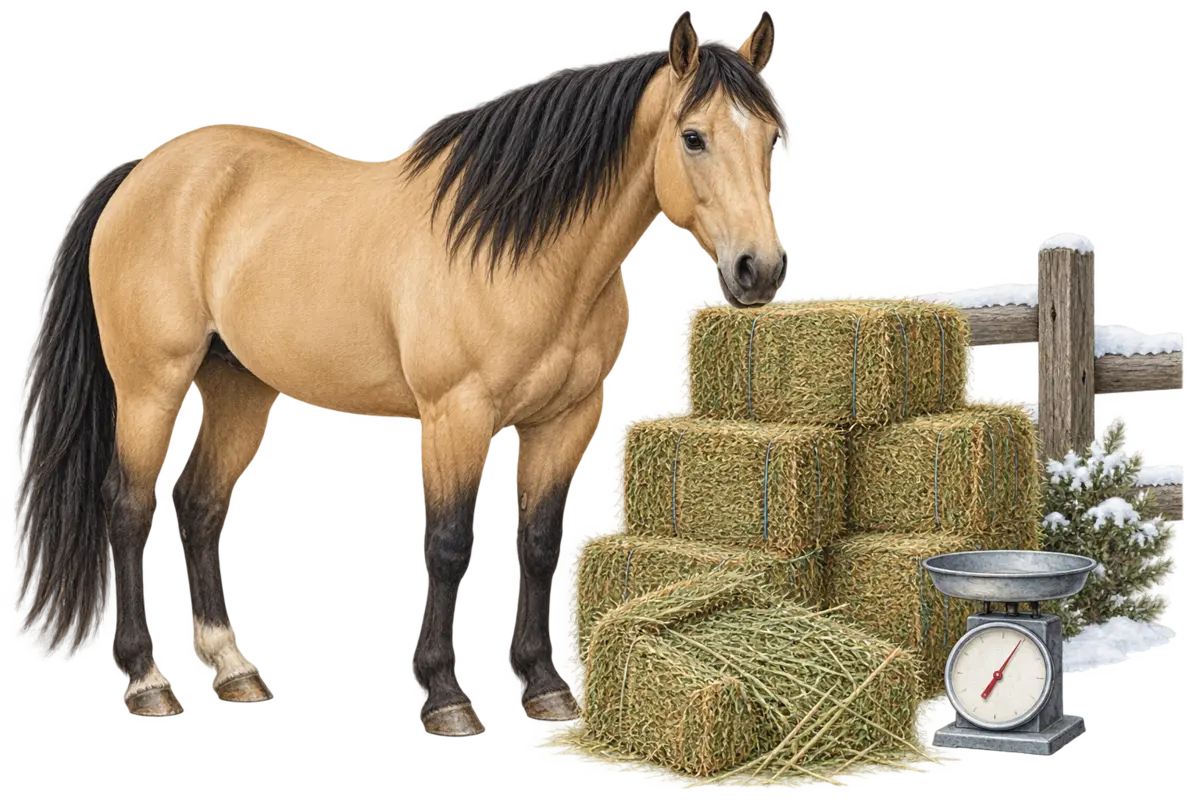
Small square bales run roughly 40 to 70 lb, large squares and rounds vary
enormously. Weigh a few of yours rather than trusting the number on the invoice.
What you need
Buy a margin. A late spring, a hard winter or
a horse that needs more than you planned will all eat into this. Most people who run out do so
in April, when hay is dearest and worst.
Worth knowing
Where the numbers come from
Two percent of body weight is the common maintenance figure for forage, dry
matter, per day. A 1,100 lb horse is therefore about 22 lb of hay a day before waste.
Cold weather raises the requirement. Fermenting fiber in the hindgut is how a
horse makes heat, so more hay is the correct answer to a cold night, not more grain.
Waste is real and it is mostly underestimated. Feeding on the ground in mud
wastes far more than a slow feeder or a net. Fifteen percent is a fair default, and a bad setup
can push past thirty.
Weigh your bales. A bathroom scale and one bale settles it. A twelve percent
error in assumed bale weight is a month of hay across a winter.
Storage matters as much as quantity. Vitamin E degrades in stored hay, which is
one reason a horse on hay all winter is a deficiency risk. See the
supplement guide.