

Hydration and Normal Vitals Log
Record what you observe and learn what is normal for this horse. This log highlights change; it does not diagnose illness, dehydration, colic, laminitis or infection.
Severe symptoms outrank this form.
A horse with severe pain, breathing difficulty, collapse, uncontrolled bleeding, neurologic signs, a serious eye injury, or a wound over a joint needs veterinary attention regardless of what this tool shows.
These ranges are a comparison, not a diagnosis.
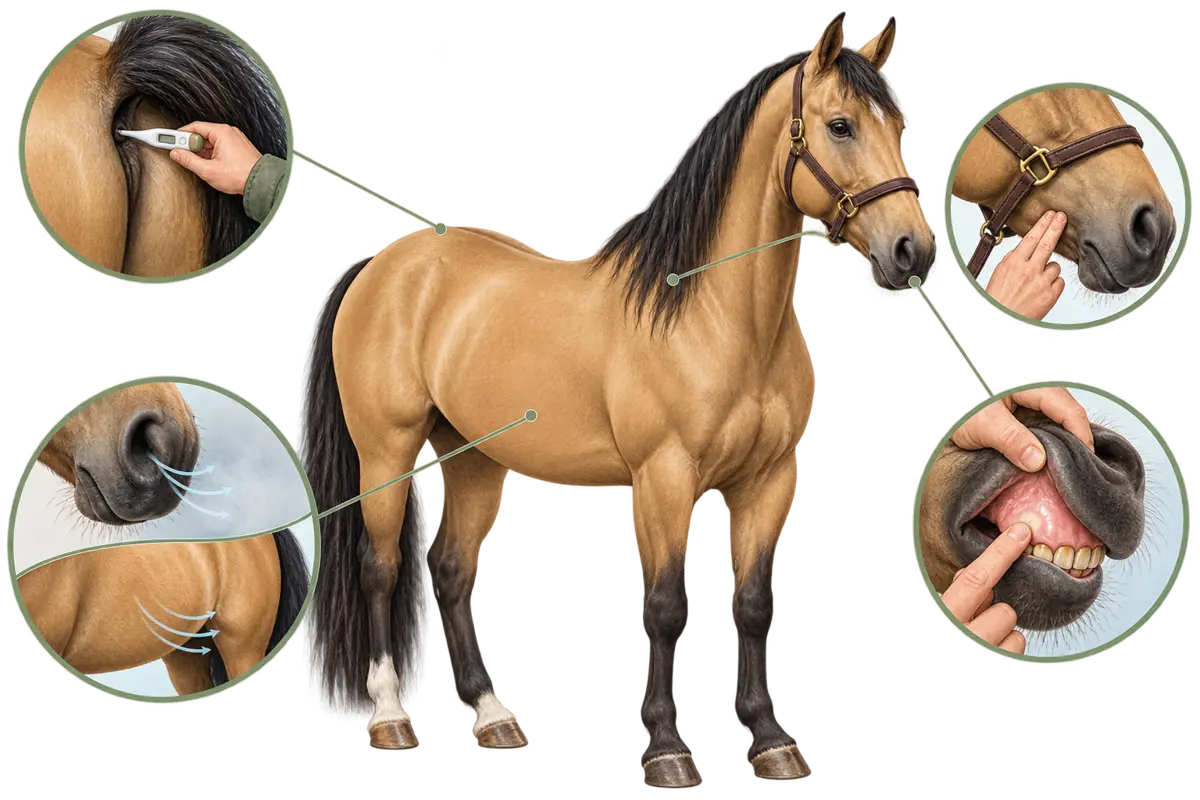
Every figure below is for an adult horse at rest. A single reading matters less than a change from what is normal for this horse, which is the reason to take these measurements while the horse is well.
| Observation | Adult horse at rest | Which direction is the concern |
|---|---|---|
| Temperature | 99 to 101.5°F / 37.2 to 38.6°C | Either direction. A raised temperature also means keeping this horse away from others until your veterinarian advises. |
| Heart rate | 28 to 44 beats/minute | Mainly a raised rate, particularly in a horse that has not just worked. |
| Respiratory rate | 10 to 24 breaths/minute | Mainly a raised rate, or breathing that looks like effort. |
| Capillary refill | About 1 to 2 seconds | Delay is the concern. A refill faster than a second is not itself a problem, and this tool does not flag one. |
| Skin-pinch return | About 1 to 2 seconds | Delay is the concern. Skin elasticity also changes with age and body condition, so read it alongside gums and water intake. |
| Gums | Wet, pink and shiny | Pale, brick red, purple or blue, or yellow gums all need a veterinary call. Dry or tacky gums need a recheck. |
| Manure and water | Normal for this horse | Markedly reduced or absent output, or markedly reduced drinking, are changes worth acting on. |
These figures do not describe every horse. Foals run higher than adults. Donkeys and mules differ from horses and often show less. Exercise, hot weather, excitement, transport, pain and pregnancy all move these numbers for ordinary reasons. A horse already under veterinary care follows the plan you were given, not this table.
Context is recorded, and it changes how a reading is read. A raised heart or breathing rate straight after work is expected and is reported here as something to recheck rather than as an emergency. A raised temperature is treated the same way in every context, because work does not explain a fever.
An individual horse’s normal baseline matters. Recheck a surprising measurement and contact your veterinarian if you are concerned. A horse with severe symptoms needs veterinary attention regardless of what this tool shows.
Trends by horse
Record, compare, then use judgment.
- Practice when the horse is healthy and resting so you learn a safe, repeatable method.
- Record the context. Do not compare the first minute after work with a quiet resting baseline.
- Look at the whole horse: appetite, attitude, manure, water, gums and movement matter alongside numbers.
- Share the printable record with your veterinarian; do not use it to delay a call.
Sources
- Penn State Extension: How to Take Your Horse’s Vital Signs
- UC Davis California Veterinary Emergency Team: Normal Vital Signs
- University of Minnesota Extension: Basic horse first aid and emergencies
Page content last reviewed by Lazy K on August 25, 2026 against the sources above. This is an editorial review, not a veterinary review: no veterinarian has reviewed or approved this page.